All pets / Insects and invertebrates
What a tarantula really costs
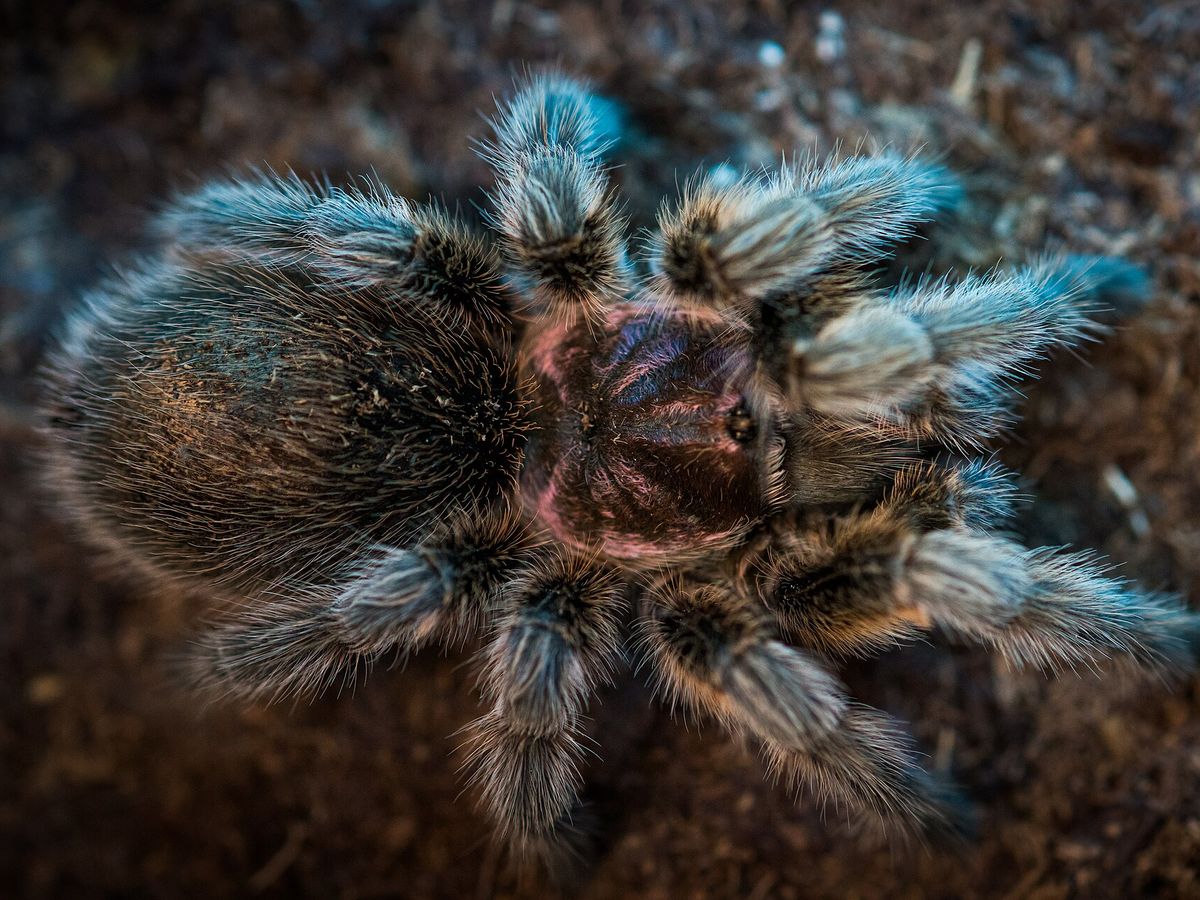
A Chilean rose hair spiderling costs about $40–$65, and a complete adult setup (enclosure, coco-fiber substrate, cork hide, water dish and a thermometer) runs about $65–$250 (typically about $135). After that it is one of the cheapest pets to keep: an adult eats an insect or two every week or two, so food and a yearly substrate change come to about $50 a year. The catch is the vet side: few vets treat spiders, no US insurer covers them, and most problems are fixed (or not) by correcting humidity and handling.
- Life expectancy
- 15–25 years
- Size
- 4–5 in leg span (females); males 3–4 in
- Care level
- Low
- Price
- $40–$100
- Setup
- About $140
- Insurance
- Not offered
Estimate for: One Chilean rose hair tarantula (Grammostola rosea), a docile ground-dwelling beginner species, bought as a captive-bred spiderling and kept at room temperature in a 5–10 gallon terrestrial enclosure; lifespan assumes a female. Space needed: 5–10 gallon terrestrial enclosure with more floor than height and 3–4 in of substrate.

Where the money goes each year
A typical year for a tarantula, with typical spending in an average-cost area.
- Feeder insects (crickets or dubia roaches)$30
- Substrate change (once a year)$20
- Illness and injury (average)$20
- Typical year$70
Most years land between $40 and $160. Items replaced on a cycle are spread across the years.
Setup and the first year
For tarantulas, the equipment usually costs far more than the animal.
Getting set up
- Price (captive-bred spiderling, online dealer or pet store)$70
- Adult terrestrial enclosure (about 12×8 in floor)$80
- Substrate, 3–4 in deep (coco fiber or tarantula mix)$20
- Cork bark hide$14
- Shallow water dish$8
- Digital thermometer and humidity gauge$13
- Heat mat + rheostat (only for homes kept below about 65°F)$0
- Upfront$210
Running costs in year one
- Feeder insects (crickets or dubia roaches)$30
- Substrate change (once a year)$20
- Illness and injury (average)$20
- Year-one running costs$70
First-year total: $280.
Make it your estimate
Change the choices that move the price most. Totals update as you go.
$6 a month in a typical year.
- Feeder insects (crickets or dubia roaches)$30
- Substrate change (once a year)$20
- Illness and injury (average)$20
- Typical year$70
What to buy
The gear and supplies in this estimate, matched to a tarantula. Each link searches Amazon for the right type and size.
- Adult terrestrial enclosure (about 12×8 in floor)Setup, typically about $80See on Amazon
- Substrate, 3–4 in deep (coco fiber or tarantula mix)Setup, typically about $20See on Amazon
- Cork bark hideSetup, typically about $14See on Amazon
- Shallow water dishSetup, typically about $8See on Amazon
- Digital thermometer and humidity gaugeSetup, typically about $13See on Amazon
- Heat mat + rheostat (only for homes kept below about 65°F)Setup, typically about $0See on Amazon
As an Amazon Associate, PetPriceTag earns from qualifying purchases. Buying through these links costs you nothing extra and never changes our cost figures.
Health costs to plan for
| Condition | What it is | Typical treatment | Cost |
|---|---|---|---|
| Dehydration (desiccation) | Veterinarian Douglas Mader calls desiccation one of the most common causes of death in captive tarantulas. A dehydrated spider looks like a deflated balloon, per Jorg Mayer, DVM (dvm360). The usual cause is no water dish or a bone-dry enclosure. Source | Mayer advises a water-soaked sponge rather than a dish for a weak spider (to avoid drowning) and a vet's injected fluids in severe cases; at home this costs $0–$9 for a dish, while an exotic consultation is about $118 (The Gentle Vets) | $0–$120 |
| Bad molt (stuck or damaged exoskeleton) | A freshly molted spider is soft for days: Mayer warns that live crickets can injure it, and Josh's Frogs says not to feed for at least a week after a molt. PetSmart lists trouble molting as a reason to see an exotics vet. Source | Mostly prevention (remove live prey, keep humidity right); ThePricer puts a vet's failed-molt intervention at $100–$250, and outcomes are often poor | $0–$250 |
| Fall injury (ruptured abdomen, hemolymph loss) | Mader writes that a drop can cause concussive damage that may be fatal; Mayer calls hemolymph (blood) loss from a fall an emergency. Heavy-bodied terrestrial tarantulas should not be handled high off the ground. Source | Sealing the wound with surgical glue or household superglue (no sutures, which interfere with molting), per Mayer; ThePricer puts a vet fall assessment at $75–$150 | $0–$150 |
| Mold, fungus and mites from wet substrate | Mayer lists fungal disease from substrate kept too wet, and mite infestations, among common tarantula problems. Chilean rose hairs want mostly dry substrate as adults (Josh's Frogs). Source | Replace the substrate and let the enclosure dry ($10.98 for Eco Earth up to $39.95 for 18 qt of tarantula mix) | $11–$40 |
The yearly estimate includes an average of $20 for illness and injury. No mainstream US insurer covers spiders. Nationwide's exotic plan, the main one, lists birds, rabbits, mini pigs and goats, lizards/reptiles/frogs, guinea pigs, and ferrets and small mammals, and says any species not listed is ineligible.
What drives the cost
- Sex changes the lifetime math more than anything else: Exo Terra says females often reach 15–20+ years and males about 5–7, and veterinarian Douglas Mader writes that males die within a month or two of their final molt. Spiderlings are sold unsexed, so a sling has roughly even odds of being a short-lived male; a confirmed female costs more (one dealer survey found $148 for a 3.5 in Mexican red-knee female).
- Mail-order slings are cheap but shipping is not: dealers often set a $50 live-animal minimum, and ThePricer found $29 for FedEx hold-for-pickup shipping, so a $40 spiderling can cost $70–$95 delivered.
- A sling starts in a small vial or deli cup; the adult enclosure priced here is needed within a couple of years. Josh's Frogs' rule: floor at least 2× the leg span one way and 3× the other, height no more than 2× the leg span, which a 12×8×8 in enclosure or a 5–10 gallon tank meets.
- Heat is usually unnecessary: Josh's Frogs recommends the mid-70s to low-80s °F and only warns against regularly dropping below 65°F, so most US homes need no heater and electricity is close to $0.
- Food is trivial: adults eat every 1–2 weeks (Exo Terra) and can fast for weeks or months before a molt, and PetSmart sells crickets at 14–17¢ each and 25 medium dubia roaches for $9.99.
Is it legal where you live?
Legal to keep without a permit in most of the US. Florida requires an FDACS permit (form FDACS-08208) to bring tarantulas into the state; most species, including ground dwellers like this one, are in its approved-without-conditions category. Hawaii prohibits importing any animal not on its approved or restricted lists, and no spiders are listed, so tarantulas cannot legally be brought in. Check city and HOA rules elsewhere.
Restricted or banned in: Florida, Hawaii.
Cities and counties can have their own rules. Check locally before you buy.
- Captive-bred spiderling, online dealer or pet store
- $40–$100
- Lifetime
- $1,600
How this estimate is built
Every line, with the typical, thrifty and generous figures and where each comes from.
| Item | Typical | Basis and sources | |
|---|---|---|---|
| Setup | |||
| Adult terrestrial enclosure (about 12×8 in floor) | $80 | PetSmart says 5 gallons minimum, 10+ if you have room, with a tight lid. Low: Exo Terra Faunarium Large (14½ × 8½ × 10 in plastic) $21.99 at Josh's Frogs. Typical: Exo Terra 12×12×12 in front-opening glass terrarium $79.95 at The Bio Dude. High: Tarantula Cribs 12×8×8 in acrylic enclosure $99.99 at Ty Dye Exotics, sold for Grammostola and similar terrestrials. Josh's Frogs: Exo Terra Faunarium Large ($21.99); The Bio Dude: Exo Terra 12 x 12 x 12 Glass Terrarium ($79.95); Ty Dye Exotics: Tarantula Cribs Large Slider Crib Pro 12x8x8 ($99.99); PetSmart: Mexican Red-Knee Tarantula (enclosure guidance) | |
| Substrate, 3–4 in deep (coco fiber or tarantula mix) | $20 | Exo Terra suggests about 3–4 in; Josh's Frogs 4+ in for adults. A 12×8 in floor filled 4 in deep is 384 cu in (about 6 L). Low: Zoo Med Eco Earth 3-brick pack (21–24 L once expanded) $10.98 at PetSmart. Typical: Terra Aranea tarantula substrate 6 qt $19.95. High: Terra Aranea 18 qt $39.95. PetSmart: Zoo Med Eco Earth Expandable Substrate, 3 bricks ($10.98); Ty Dye Exotics: Tarantula supplies (Terra Aranea 6 qt $19.95, 18 qt $39.95); Exo Terra: Grammostola rosea care guide | |
| Cork bark hide | $14 | Zoo Med Natural Cork Flats at Chewy: small $10.98, medium $13.99, large (about 10×8 in) $19.99. Chewy: Zoo Med Natural Cork Flats Reptile Hideout | |
| Shallow water dish | $8 | Exo Terra: keep a shallow dish of clean water available at all times. Zoo Med Repti Rock dish at Chewy: small $7.99 (1 in deep), medium $8.99. Chewy: Zoo Med Repti Rock Food & Water Dishes; Exo Terra: Grammostola rosea care guide | |
| Digital thermometer and humidity gauge | $13 | Josh's Frogs strongly recommends a thermometer; PetSmart lists a thermometer and hygrometer. Zoo Med Digital Combo thermometer/humidity gauge $12.99 at Chewy; OASE digital thermometer $15.99 at Dubia.com. Chewy: Zoo Med Digital Combo Thermometer Humidity Gauge ($12.99); Dubia.com: Thermostats and thermometers; Josh's Frogs: Chilean Rose Hair Tarantula care notes | |
| Heat mat + rheostat (only for homes kept below about 65°F) | $0 | Josh's Frogs: mid-70s to low-80s °F is ideal, avoid regularly dropping below 65°F; most homes need nothing. For a cold room: Zoo Med ReptiTherm under-tank heater for 10–20 gal (8 W) $27.95 at The Bio Dude, which says it must be used with a thermostat, plus a Zoo Med ReptiTemp rheostat $32.99 at Dubia.com. The Bio Dude: Zoo Med ReptiTherm Under Tank Heater ($27.95, 8 W); Dubia.com: Zoo Med ReptiTemp Rheostat ($32.99); Josh's Frogs: Chilean Rose Hair Tarantula care notes (temperature) | |
| Every year | |||
| Feeder insects (crickets or dubia roaches) | $30 | Exo Terra: feed adults every 1–2 weeks; Furry Critter Network notes they can fast for weeks or months. Typical: about one insect a week, bought as three 25-count tubs of medium dubia roaches a year at PetSmart ($9.99 each) = $30. Low: one cricket every 1–2 weeks at 17¢, about $5–$9 a year plus trips. High: ThePricer's upper estimate of $80 a year (mixed feeders, shipped orders). Spiderlings eat smaller prey more often but cost about the same. PetSmart: Reptile food (crickets 14–17¢ each, dubia roaches 25 for $9.99); Exo Terra: Grammostola rosea care guide (feeding); ThePricer: How Much Does a Tarantula Cost? (annual food $30–$80); Furry Critter Network: Chilean Rose Hair (Feb 2026) | |
| Substrate change (once a year) | $20 | One full substrate change a year using the same products as the setup: Eco Earth 3-brick pack $10.98, Terra Aranea 6 qt $19.95 or 18 qt $39.95. ThePricer puts enclosure maintenance at $10–$30 a year. PetSmart: Zoo Med Eco Earth Expandable Substrate, 3 bricks ($10.98); Ty Dye Exotics: Tarantula supplies (Terra Aranea); ThePricer: How Much Does a Tarantula Cost? (maintenance $10–$30) | |
| Electricity (only if a heat mat is used) | $0 | No heat in most homes. High: an 8 W heat mat running around the clock = 70 kWh a year × $0.1799/kWh (EIA US residential average, 12 months to July 2026) = $13. EIA Electric Power Monthly Table 5.3 (residential, rolling 12 months to July 2026 = 17.99¢/kWh); The Bio Dude: Zoo Med ReptiTherm Under Tank Heater (8 W for 10–20 gal) | |
| Illness and injury, per year | |||
| Unexpected costs (husbandry fixes and the rare exotic-vet visit) | $20 | LOW CONFIDENCE: no survey of tarantula health spending exists. Vets who treat invertebrates are rare, and veterinarian Douglas Mader writes that tarantulas have few medical problems beyond husbandry and trauma, so most years cost $0 or a few dollars for a new water dish or substrate. ThePricer suggests a $100–$250 reserve and quotes $50–$100 for a consultation, $75–$150 for a fall assessment and $100–$250 for a failed-molt intervention; The Gentle Vets (WI) charges $118.39 for an exotic consultation. Typical assumes one such visit every five or six years (about $20 a year); high assumes one a year. Veterinary Practice News: Got spiders? An overview of potential invertebrate patients (Douglas Mader, DVM, 2022); ThePricer: How Much Does a Tarantula Cost? (vet costs); The Gentle Vets (Green Bay, WI): Exotics pricing (consultation $118.39) | |
More insects and invertebrates by yearly cost
- Emperor scorpion$100 a year
- Land hermit crab$140 a year
- Compare all insects and invertebrates
Common questions
How much does a tarantula cost?
Captive-bred spiderling, online dealer or pet store: $40–$100. The bigger costs come after: about $140 to set up, about $280 for the whole first year, then about $70 a year.
How much does a tarantula cost per year?
About $70 a year ($6 a month) for a typical owner in an average-cost area, ranging from about $40 for a thrifty owner in a lower-cost area to $160 for a generous owner in a big city.
How much does a tarantula cost over its lifetime?
About $1,600 over a 20-year life, in 2026 dollars.
Sources
- Exo Terra: Grammostola rosea care guide (feeding)
- Veterinary Practice News: Got spiders? An overview of potential invertebrate patients (Douglas Mader, DVM, 2022)
- dvm360: INVMA 2017, Managing Invertebrates in Practice
- Josh's Frogs: Chilean Rose Hair Tarantula care notes (temperature)
- ThePricer: How Much Does a Tarantula Cost? (vet costs)
- Nationwide: Pet insurance for exotic pets (eligible species)
- Hardcore Arachnids: Grammostola rosea 3/4 in ($55)
- Ty Dye Exotics: Grammostola rosea ex G. porteri ($64.99 sling, $127.99 juvenile)
- PetSmart: Mexican Red-Knee Tarantula (enclosure guidance)
- Josh's Frogs: Exo Terra Faunarium Large ($21.99)
- The Bio Dude: Exo Terra 12 x 12 x 12 Glass Terrarium ($79.95)
- Ty Dye Exotics: Tarantula Cribs Large Slider Crib Pro 12x8x8 ($99.99)
- PetSmart: Zoo Med Eco Earth Expandable Substrate, 3 bricks ($10.98)
- Ty Dye Exotics: Tarantula supplies (Terra Aranea)
- Chewy: Zoo Med Natural Cork Flats Reptile Hideout
- Chewy: Zoo Med Repti Rock Food & Water Dishes
- Chewy: Zoo Med Digital Combo Thermometer Humidity Gauge ($12.99)
- Dubia.com: Zoo Med ReptiTemp Rheostat ($32.99)
- The Bio Dude: Zoo Med ReptiTherm Under Tank Heater (8 W for 10–20 gal)
- PetSmart: Reptile food (crickets 14–17¢ each, dubia roaches 25 for $9.99)
- Furry Critter Network: Chilean Rose Hair (Feb 2026)
- EIA Electric Power Monthly Table 5.3 (residential, rolling 12 months to July 2026 = 17.99¢/kWh)
- The Gentle Vets (Green Bay, WI): Exotics pricing (consultation $118.39)
- Florida FDACS-DPI: Guidelines for Importing Arthropods and Other Invertebrates into Florida (Oct 2023)
- Hawaii Administrative Rules ch. 4-71, Non-Domestic Animal Import Rules (§4-71-6)
- Hawaii Dept. of Agriculture: List of Conditionally Approved Animals
- Hawaii Dept. of Agriculture: List of Restricted Animals (private and commercial use)
Estimates in 2026 US dollars. Vet prices for this pet use the same region adjustment as the rest of the site (methodology). Updated October 14, 2026.